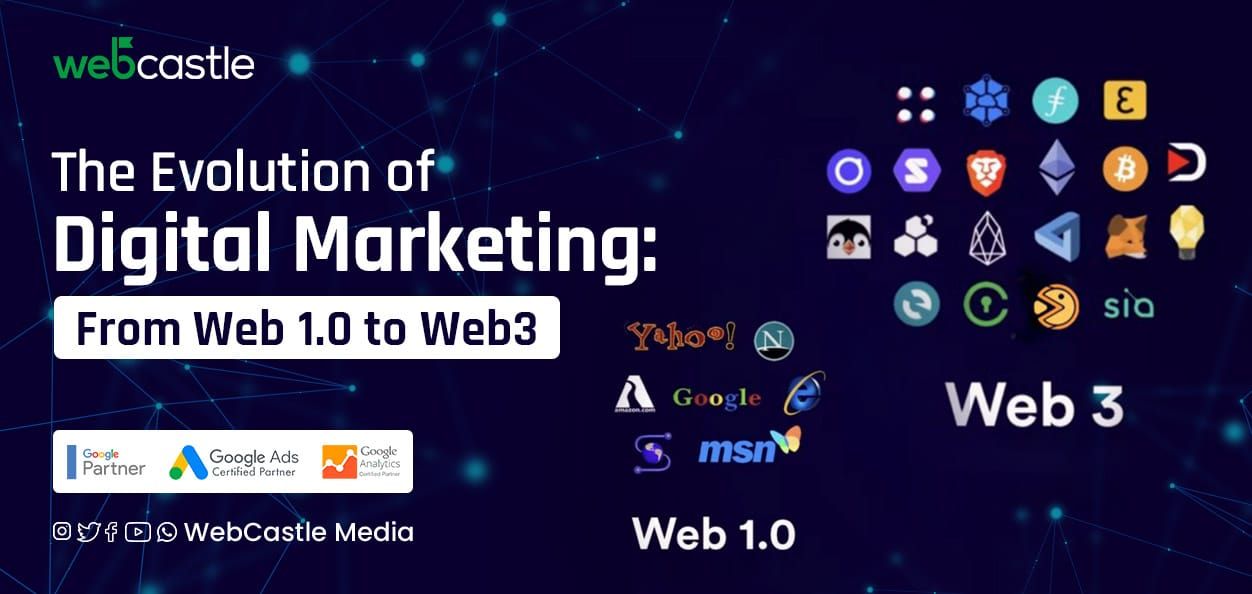
The Evolution of Digital Marketing: From Web 1.0 to Web3
The landscape of digital advertising agency in India has undergone rapid and dramatic changes over the past few decades. As technology and consumer behaviour continue to evolve, brands and marketers must adapt their strategies to stay ahead of the curve. Here is an overview of the major eras of digital marketing and how practices have shifted during each period:
Web 1.0 Digital Marketing (1990s)
The early days of digital marketing focused on basic website development and email marketing. Most brand sites were simple online brochures with limited interactivity. Images were static, text-heavy, and changed infrequently. Development costs were high so online presence was limited to larger brands. Search engine optimization (SEO) became important to get websites to rank high in results. Tactics focused on meta tags, incoming links, and keyword-rich content. Email marketing was also used heavily. Email lists were manually compiled and newsletters provided basic product/service information broadcasted to general audiences.
Web 2.0 Digital Marketing (2000s)
The rise of user-generated content, social media, and advanced analytics transformed digital marketing by focusing more on consumers directly. Campaigns shifted from broadcasting to engagement. The development of blogs, videos, and platforms like Facebook and YouTube allowed brands to connect with consumers in more personal ways. Marketers could interact with audiences and provide entertaining or educational content focused on relationship-building vs direct sales pitches.
Content marketing took off during Web 2.0. Creative formats like infographics, quizzes, and interactive content allowed brands to demonstrate expertise and tell stories that resonated with niche audiences. Inbound marketing gained traction as a methodology to earn consumer attention vs. buying it through ads. Tactics included SEO, content creation, and social media engagement. Email marketing also became more sophisticated with segmented lists based on user data and behaviour.
Advances in pay-per-click advertising like Google AdWords made digital ads scalable for any business with a website. Display ads evolved from simple banners to targeted ads based on location, context, and user data. Digital analytics provided robust data on traffic, conversions, and KPIs.
Web 3.0 Digital Marketing (2010s)
Mobile proliferation caused brands to focus on responsive design and mobile apps. Display ads extended to smartphones and messaging apps. Social media matured with more visual content, videos, and paid advertising options. Community management and quick responses drove engagement on social platforms.
Marketing automation technology-enabled personalized, automated campaigns across channels like email, social, websites, and apps. Tools leveraged data and behavioral inputs to refine targeting and messaging. Big data and analytics allowed deeper consumer insights and attribution modeling to quantify marketing ROI.
Emerging technology created new engagement opportunities. For example, augmented reality allowed interactive brand experiences while virtual reality provided immersive environments. Voice search grew as people accessed information through smart assistants. Connected devices and the Internet of Things opened possibilities for personalized real-time interactions
The Future of Digital Marketing (Web3)
We are currently on the cusp of the next era of digital marketing driven by blockchain, augmented/virtual reality, and artificial intelligence. Blockchain technology will bring transparency and security to consumer data while delivering more relevant digital experiences from the digital marketing agency in Kochi. AI will automate content production and campaign optimization. Voice search and virtual assistants will be increasingly important marketing channels. Autonomous vehicles may even enable location-based mobile messaging and ads.
While the tactics will change, human connection will still be at the core of digital marketing. As technology evolves, the fundamentals of storytelling and audience understanding will drive brand success. Agility and continuous learning will be key for marketers to leverage new innovations as the digital landscape develops.