Even after investing thousands of dollars in marketing, an enterprise business may still struggle to arrange meetings with the right decision-makers. It may attract website visitors, receive attention on social media, and send hundreds of emails through its sales team. However, many of the enquiries may not match the company's actual sales targets. This often happens when a website attracts visitors who have little interest in purchasing its services. Enterprise purchases usually involve several decision-makers, longer evaluation periods, and significant financial investments. A lead generation strategy must account for these factors to attract potential customers who are more likely to become clients.
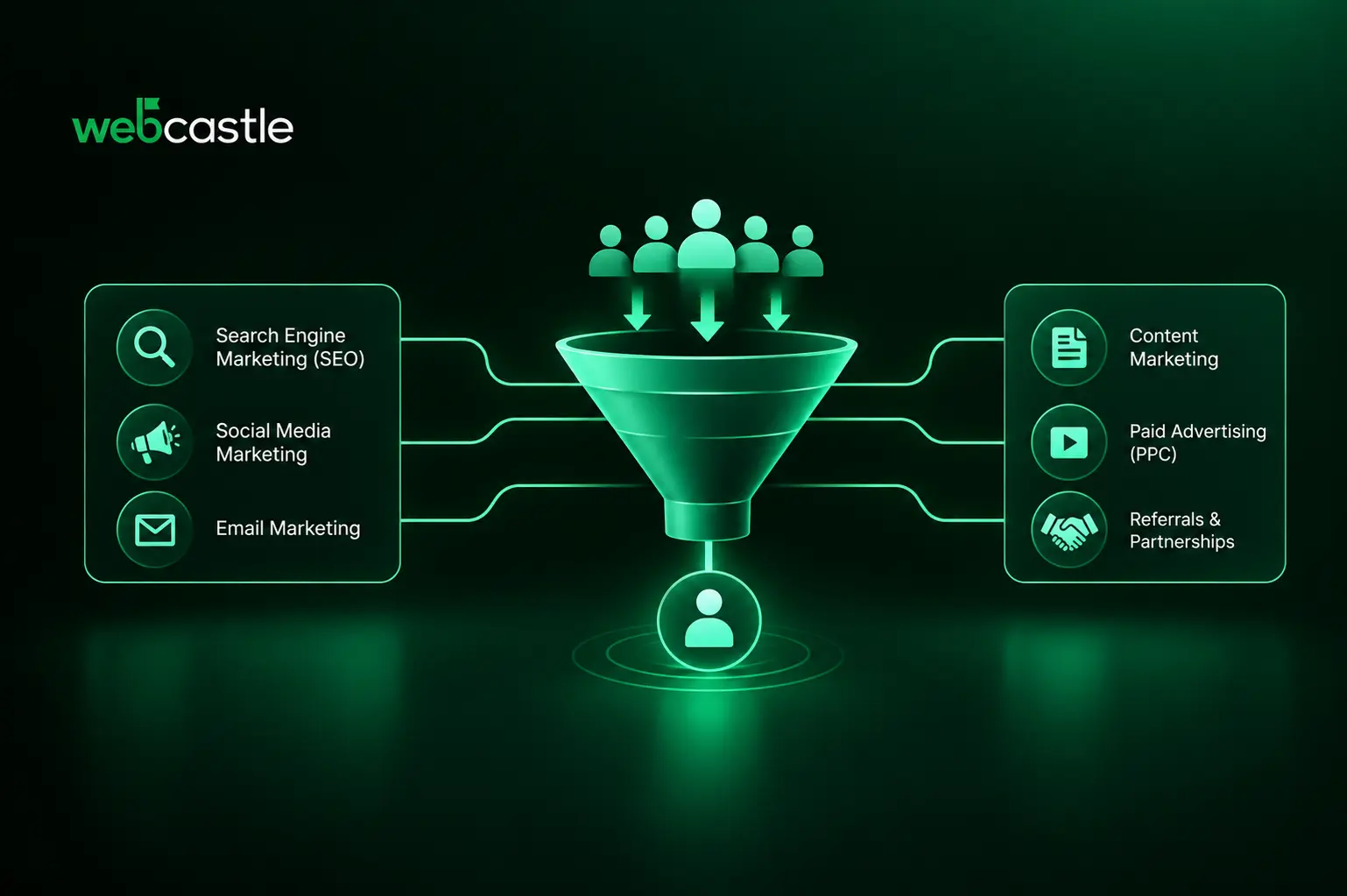
For enterprise companies, the main lead generation channels include website visitor identification, LinkedIn, SEO, email marketing, Google Ads, account-based marketing, webinars, and industry networking. Each channel serves a different purpose. The challenge is to identify the right combination of channels based on the company's target audience, services, and sales goals.
1. Website Visitor Identification
Not all companies fill out a contact form when researching a service provider. Their employees may visit a pricing page, read a case study, explore service pages, and leave without contacting the business. Website visitor identification tools can help businesses identify some of the organisations visiting their websites, depending on the technology used and applicable privacy requirements.
However, these tools cannot identify every visitor or always confirm which organisation they work for. A company match may be unavailable or inaccurate, particularly when visitors use residential or personal internet connections or browse from regions with limited IP registration coverage. These tools may identify an organisation without revealing the individual employee who visited the website.
This gives sales teams an additional way to assess potential interest from different accounts. For instance, if a company repeatedly visits your website and matches your target customer profile, it may be worth investigating further. However, repeated visits alone do not confirm that the organisation is ready to purchase. These insights can help businesses:
- Find organisations that may be interested in specific services.
- Identify which website pages attract potential buyers.
- Focus on accounts that may be worth following up with.
- Support retargeting and account-based marketing campaigns when the available data, platform integrations, and privacy requirements allow it.
2. LinkedIn and Professional Social Selling
Enterprise buyers rarely make decisions after seeing a few advertisements. They want to understand a service provider's experience, approach, and ability to solve their business problems. Companies can use LinkedIn to connect with professionals and build relationships with potential decision-makers.
Marketing teams can share industry insights, case studies, company updates, and useful discussions on the platform. Sales teams can also identify relevant professionals and start conversations with them.
A social media agency in Kerala working with enterprise businesses should understand that reaching relevant professionals and decision-makers is more important than simply increasing follower counts. The following activities can help businesses use LinkedIn more effectively:
- Sharing insights and practical advice from industry professionals.
- Presenting case studies with measurable business results.
- Running targeted campaigns for relevant job roles and industries.
- Participating in discussions involving potential customers.
- Using LinkedIn advertising to reach relevant professional audiences with useful content and offers.
3. SEO and Content Marketing
Businesses researching products and services often use search engines to compare available options. Before contacting a provider, enterprise buyers may look for technical details, service comparisons, implementation information, and examples of previous work.
SEO helps a business appear in search results when potential customers look for relevant products or services. Content marketing provides useful information that helps visitors understand the available solutions and make informed decisions. The following elements can support an enterprise content strategy:
- Service and solution pages.
- Industry-specific case studies.
- Technical guides and whitepapers.
- Comparisons of different products, services, and solutions.
- Articles covering common implementation challenges.
4. Email Marketing and Outreach
Sending the same sales message to thousands of people is unlikely to build strong relationships with enterprise buyers. Effective enterprise outreach requires an understanding of the target organisation, its key decision-makers, and the business challenges it may be facing. A more targeted approach can include:
- Segmenting contacts by industry, company size, and job role.
- Sending relevant information to each audience segment.
- Sharing useful research, case studies, and product updates.
- Following up based on previous interactions.
- Providing a clear reason for arranging a meeting.
A procurement manager and a technology head may have different reasons for considering the same service. Email messages should address the specific concerns and priorities of each recipient.
In addition, email campaigns must comply with applicable privacy and marketing laws. Requirements vary depending on the recipient's location, whether the recipient is a business or individual subscriber, and how personal data is used. Having a contact list does not automatically give a company permission to send unlimited marketing emails.
5. PPC Lead Generation
Building visibility through SEO takes time. Paid search advertising allows businesses to reach people who are actively searching for specific products or services. Google Ads enables companies to target relevant search terms and direct potential customers to dedicated landing pages. LinkedIn advertising can also help businesses reach selected professional audiences and industry segments.
However, paid campaigns can become expensive if the landing page does not provide the information visitors need. Before launching a campaign, businesses should check whether the landing page clearly explains:
- The services provided by the company.
- How the service addresses a specific business problem.
- The intended audience for the service.
- What makes the company's solution credible.
- What action visitors should take next.
Working with a performance marketing company in Kerala can help businesses plan and manage paid advertising campaigns, monitor campaign results, and identify areas for improvement. The focus should be on generating relevant enquiries rather than simply increasing clicks or website traffic.
6. Account-Based Marketing
Account-based marketing (ABM) focuses on a selected group of organisations instead of targeting a broad audience. It can be useful when a company has a clear profile of its ideal customers and understands the people involved in purchasing decisions.
For instance, a technology provider targeting large manufacturing companies may identify organisations that need better production management systems. Its marketing campaigns can then address the specific concerns of IT leaders, operations managers, finance teams, and senior executives within those organisations.
ABM can combine the following activities:
- Personalised email campaigns.
- Inbound marketing and LinkedIn campaigns.
- Industry-specific content.
- Direct sales engagement.
- Invitations to relevant events and product demonstrations.
7. Webinars and Online Events
Enterprise buyers often need detailed information before making a major purchasing decision. Webinars allow businesses to explain complex services, share industry knowledge, and answer questions without requiring potential customers to attend an in-person meeting.
People interested in a particular business problem can join a webinar to learn about possible solutions. Product demonstrations, expert discussions, and interactive sessions can also help businesses establish credibility.
To use webinars as a lead generation channel:
- Select a topic that addresses a specific customer problem.
- Invite speakers with relevant industry knowledge.
- Allow participants to ask questions.
- Share useful resources after the session.
- Follow up with participants based on their interests and questions.
8. Industry Events, Partnerships and Referrals
When enterprise buyers consider a major purchase, they often prefer to speak with industry professionals and trusted business contacts before making a decision. These conversations may take place at industry conferences, trade shows, professional association meetings, and business networking events.
Such channels give companies opportunities to connect with potential customers, understand industry concerns, and build relationships with other businesses.
Referrals are also valuable because recommendations from trusted business contacts can reduce the uncertainty involved in choosing a service provider. However, exchanging business cards or contact details is only the first step. Following up with a message that refers to the earlier conversation and addresses the person's business needs can help move the relationship forward.
How Should Enterprise Companies Choose the Right Channels?
Choosing the right lead generation channels is an important part of an enterprise marketing strategy. No single channel works equally well for every business. The right choice depends on the target market, sales cycle, deal value, available budget, and buying behaviour.
Businesses should evaluate each channel based on the following factors:
Audience reach: Does the channel reach the organisations and decision-makers you want to target?
Purchase intent: Does it attract people who are actively looking for a solution, or does it mainly help build awareness?
Conversion path: Can potential customers easily move from their first interaction to a meaningful conversation with the sales team?
Measurement: Can you track how channel activity contributes to qualified leads, sales opportunities, and revenue?
When choosing a digital marketing company in Kerala, businesses should evaluate its ability to attract relevant leads and support business goals. They should also consider whether the agency has experience in SEO, paid advertising, social media marketing, and lead generation.
A performance marketing company in Kerala should be able to explain how it plans campaigns, tracks conversions, and evaluates lead quality. Similarly, a social media agency in Kerala should understand how to reach the right audience and use social platforms to support business objectives.
A company such as WebCastle should be assessed on how it measures lead quality, aligns marketing activities with sales goals, and improves the conversion process. Website traffic and advertising reach alone are not enough to measure the success of a marketing agency.
Final Thoughts
Enterprise lead generation requires an understanding of how business buyers research, compare, and approve solutions. Website visitor identification can provide information about potential account-level interest, although it cannot confirm purchase intent. LinkedIn and content marketing help businesses build credibility, while ABM, email marketing, and industry events support relationships with selected organisations. Paid search advertising helps capture demand from people actively looking for specific solutions.
The success of a lead generation strategy should be measured by the quality of the opportunities it creates, not simply by the number of clicks, visitors, or enquiries. When marketing and sales teams work towards the same target accounts and conversion goals, businesses can evaluate their results more effectively and make better decisions about future campaigns.