The Problem With “More, More, More”
For years, the default content plan was simple: publish often and hope something sticks. That approach is breaking down. In 2026, weak content fades fast.
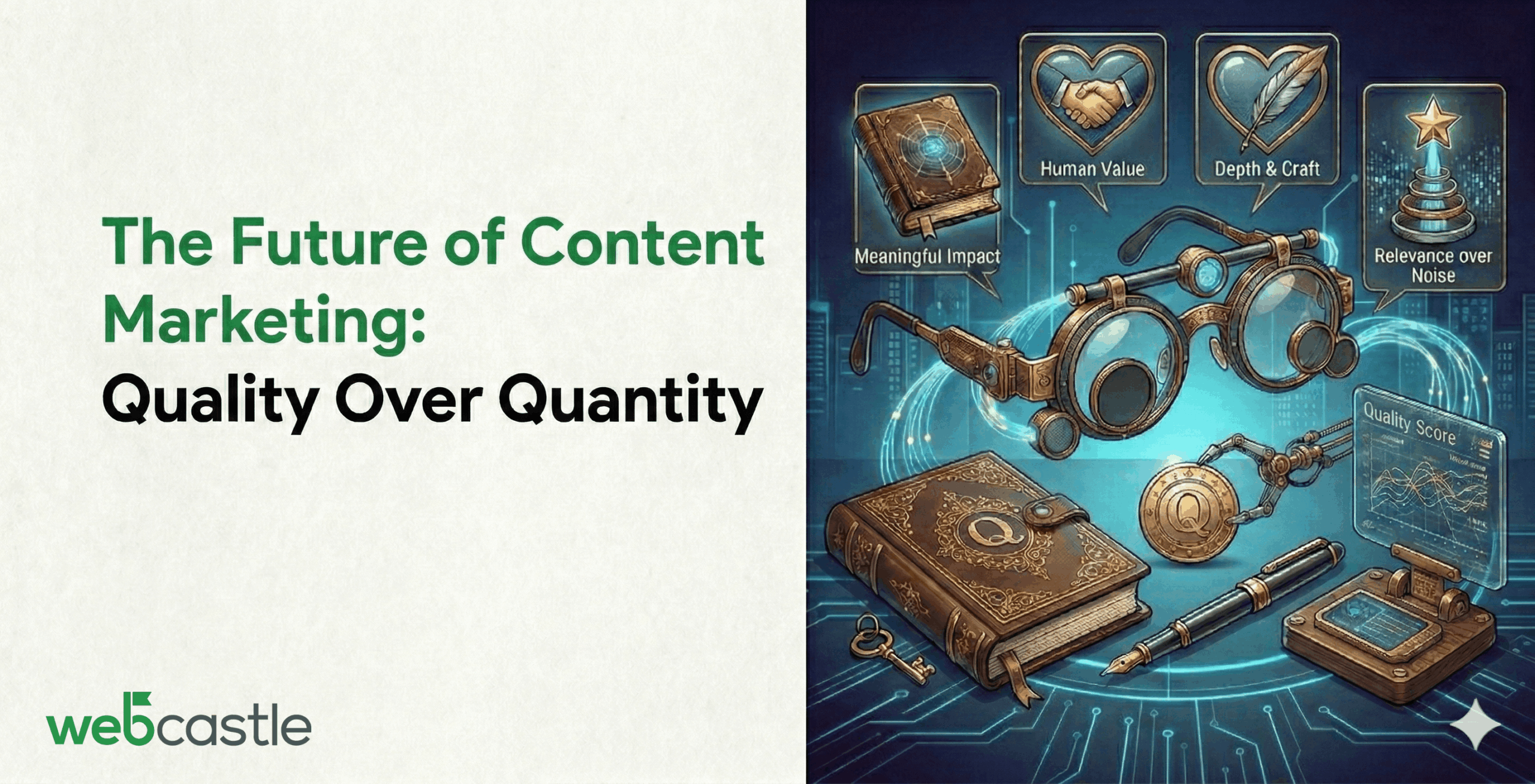
Content marketing trends 2026 favour fewer, stronger pieces. Brands that slow down and focus on quality are the ones seeing better rankings, stronger leads, and real trust.
So, what counts as “quality” now?
Quality isn’t just length or design. It’s about how well a piece answers a question and how clearly it reflects your expertise.
Think in terms of:
- Topical authority
Pick a subject area and become the useful voice on it. That means multiple, connected resources—not one random blog and then silence. - Genuinely helpful content update
With Google’s helpful-content focus, thin rewrites no longer cut it. Content has to show understanding, experience, and a clear reason to exist. - Deep, organized content
Longer content works when it’s well-structured, example-driven, and offers insights beyond page one. - Real brand storytelling
Your explanations, examples, and problems should reflect your brand—not a template.
If a reader shares your article saying, “This explains it well,” you’re on track.
Key Content Marketing Trends 2026 You Can’t Ignore
Several shifts are pushing teams toward a “quality first” mindset.
- Depth over surface-level coverage
Basic listicles are struggling. Detailed explainers, comparisons, and opinion-led pieces are holding attention and ranking better. - Video marketing is becoming standard, not optional
Short educational clips, product walkthroughs, and founder-led videos are now central pieces of strategy. They support written content and give prospects a quicker way to grasp your ideas. - Smarter content distribution strategy
Rather than blasting links everywhere, marketers are choosing a few effective channels and tailoring the message for each—email, LinkedIn, niche communities, search, and sales decks.
All of these trends point away from “post more” and towards “make each piece count”.
Building Topical Authority Instead of Chasing Every Keyword
One major shift inside marketing teams is the move from isolated blogs to topic-based planning.
Why topical authority matters:
- Search engines get clearer signals about what your site is actually good at.
- Prospects can move from beginner to advanced content on your site without leaving.
- You avoid internal competition between your own posts.
Start simple:
- Choose 3–5 themes linked to your services.
- List real customer questions at each stage.
- Create long articles, support posts, and videos around them.
- Link everything so it feels like a connected series.
This turns your website into a library on key topics instead of a random content archive.
Long-Form Content and Video: One Idea, Many Formats
Instead of treating formats separately, use one strong idea and express it in a few ways.
For example:
- Start with a full guide on a topic that matters.
- From that guide, record a short video summarising the key points.
- Cut that video into clips for social posts.
- Turn a key chart or framework into a one-slide visual for sales or webinars.
In this model, long-form content is your base, and video marketing helps more people connect with the same message in less time.
Distribution: Good Content Won’t Promote Itself
Publishing is only half the job. The rest is getting the right people to see what you’ve created.
Some simple, repeatable moves:
- Feature one strong piece per newsletter and explain why it’s worth a click.
- Share quotes or tips from one article across social media through the week.
- Give sales teams a short list of key content to send prospects.
A clear distribution strategy makes content reusable, not random.
What This Means for Boston Teams
If you offer Boston digital marketing, SEO, or web development, these shifts should reshape how you discuss content with your team and clients.
Practical implications:
- Stop selling content by count
Move away from “X blogs per month” packages. Talk about topics, authority, and the specific business outcomes that quality content supports. - Design sites to support content, not just look good
As a website development company Boston, you can structure navigation and page templates around topic clusters and resource hubs, not just static pages and a generic blog feed. - Use your own content as proof of your approach
A SEO agency Boston that publishes shallow posts is sending the wrong signal. Your articles, case-style content, and videos should show the level of depth you recommend to clients.
When your own content reflects this “quality over quantity” mindset, it becomes a powerful sales tool.
WebCastle in a Quality-First World
WebCastle aligns content, SEO, and UX to build authority and drive qualified leads.
How a partner like WebCastle can help:
- Strategy first, content second
They help you pick key topics, structure your site, and choose the right formats. - Joined-up execution
WebCastle aligns web development, SEO, and content toward one goal. - Measure and refine
They track traffic, engagement, and leads to improve future content.
For companies looking for Boston digital marketing services, a capable SEO agency in Boston, or a long-term website development company in Boston, this joined-up view is increasingly critical.
Focus on Fewer, Better Pieces
Content marketing trends for 2026 show one thing: planned quality wins.
As you plan your next quarter:
- Focus on a few key themes, not filler topics.
- Invest in deep resources and supporting video, rather than thin posts.
- Plan how to share and reuse content.
Partner with WebCastle, start with one strong asset, and focus on quality.
Build smarter, stronger content with WebCastle—start with one key asset and focus on quality today.
