Your B2B Website Is Doing More Selling Than You Think
Here is what most companies miss: Research from Gartner suggests B2B buyers spend a significant portion of their journey researching independently before contacting vendors. They have Googled your category. They have read two or three competitor pages. They have looked at LinkedIn. They have maybe even asked a peer who has used someone like you.
So when they land on your website, they are not browsing. They are evaluating. And your site either moves them forward in that process — or it quietly loses them to someone who got the experience right.
This is the part where B2B website best practices stop being a design conversation and become a revenue conversation. How your site is structured, what content it leads with, where it places trust signals — all of it affects whether that buyer stays or leaves. Whether they ask for a demo or decide they have seen enough.
Let us talk about what actually works.
The B2B Buyer Journey Is Not Linear — Stop Designing Like It Is
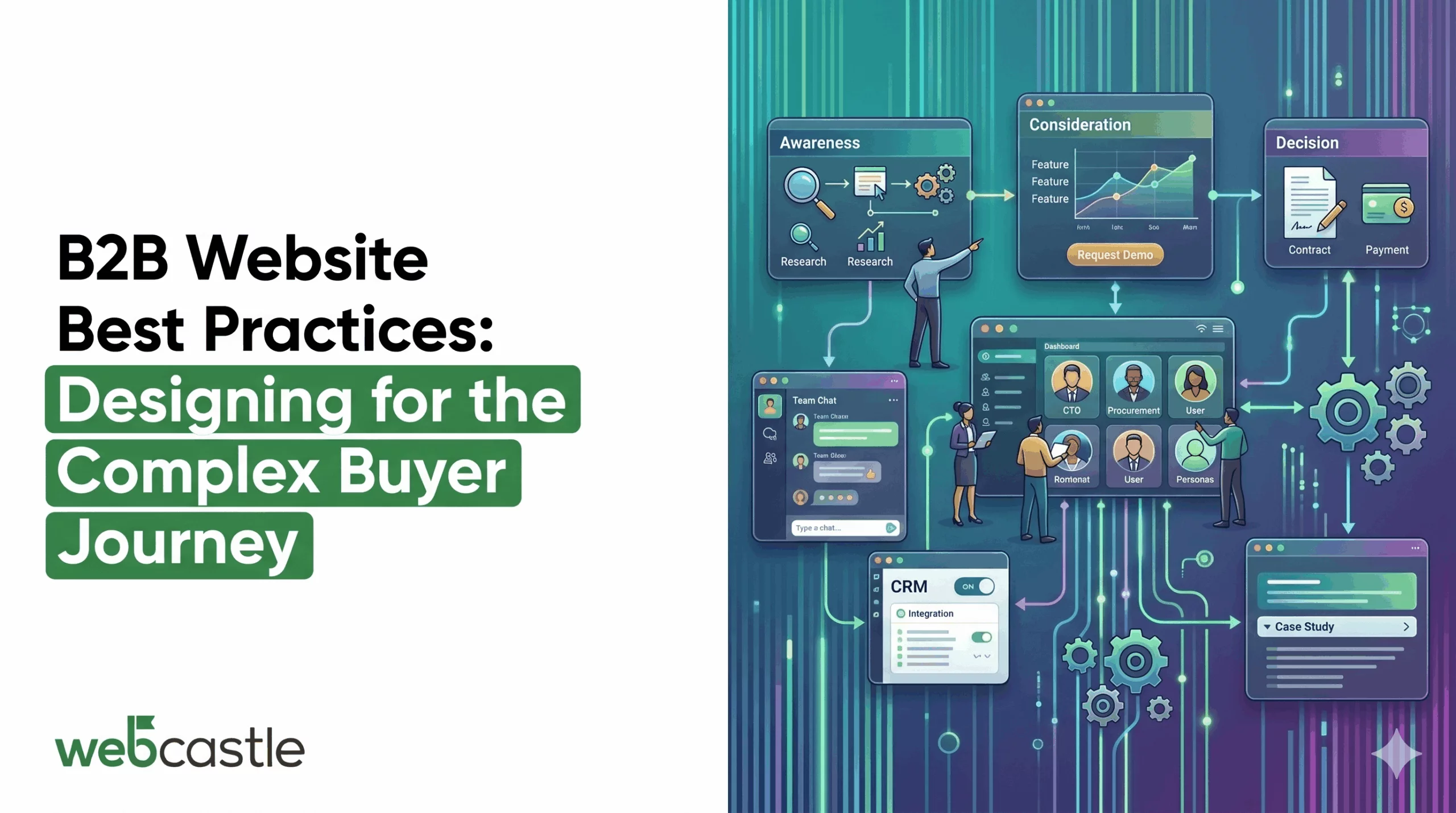
Most B2B sales funnels look neat: awareness, consideration, decision. In reality, buyers bounce around. They read your case study, then check your About page, then go back to your services section, then disappear for two weeks, then come back and watch a webinar recording.
Corporate website architecture needs to account for that non-linearity.
A few things that help:
Keep navigation simple so every section is easy to reach, use clear and intentional links to guide visitors, and structure pages so people quickly understand what to do next. Build for buyers—not your internal logic. Organise pages around what the buyer is trying to accomplish — not around how your internal teams are structured.
Lead Generation Design Is Not About Forms. It Is About Trust First.
There is a version of lead generation design that is just about sticking a contact form on every page and hoping for the best. That’s not the point.
B2B buyers are cautious—they won’t share their email with a company they don’t trust.
Industry research consistently shows that trust and credibility signals significantly influence B2B conversion decisions. Your site must build trust before asking for leads.
What builds that trust on a B2B site?
- Social proof that is specific, not vague. “Trusted by over 200 companies” is okay. A recognisable logo bar with names your buyers actually know is better. A short quote from a real person with a title and a company is better still.
- Results, not just claims. “We help companies grow faster” means nothing. “We helped reduce onboarding time significantly. “
- Visible expertise. Thought leadership layout matters here. A blog or resource section that shows genuine depth on topics your buyers care about signals that you know the space. It is not just content marketing — it is credibility at scale.
- Friction-appropriate CTAs. Not every visitor is ready to book a call. Offer guides, case studies, or audits to capture leads earlier.
Case Studies: The Most Underused Page Type in B2B
Many B2B websites underutilise case studies, often making them hard to find or not presenting them effectively.
A good case study presentation shows experience, builds trust, and helps buyers picture working with you.
Keep it effective:
- Start with the problem, not the client name
- Use clear numbers (time saved, revenue, % improvement)
- Add a real client quote
- Make it easy to scan (short sections, key highlights)
- Keep it easy to find with filters by industry or problem
Thought Leadership Layout: Where Content and Credibility Overlap
Publishing thought leadership content is one thing. Laying it out in a way that actually builds authority is another.
A lot of B2B resource sections look like they were added as an afterthought — a blog that has not been updated in four months, white papers in a generic list, webinar recordings buried three clicks deep. That kind of section does not build trust. It quietly undermines it.
Thought leadership layout that works tends to do a few specific things well:
- Featured content above the fold. Lead with your strongest, most recent piece — not a generic listing of everything you have ever published.
- Content organised by topic or buyer problem, not by format. Buyers do not search for “white papers.” They search for answers to specific questions.
- Author visibility. Showing the faces and names behind your content makes it feel human. It also positions individuals at your company as experts in their own right, which has compounding credibility benefits.
- Consistent publishing cadence. A resource section with ten pieces over five years says something different than a section with ten pieces over the last quarter.
Speed, Mobile, and the Technical Side That Non-Technical People Ignore
Good copy and case studies won’t help if your site is slow or broken on mobile. And yet — these are still surprisingly common problems, even on sites for companies that sell technology.
A few things worth checking if you have not recently:
- Core Web Vitals scores, particularly Largest Contentful Paint and Cumulative Layout Shift, which Google uses as ranking signals and which directly affect how professional your site feels to load.
- Google’s Core Web Vitals guidelines highlight how page speed and stability impact user experience and rankings.
- Mobile layout for complex content. B2B buyers often research on phones. Tables, long forms, and menus that work on desktop can fail on mobile.
- Page weight. Large, unoptimised images often slow down your site. Even a five-second load can cost you leads.
What a Real B2B Website Redesign Looks Like in Practice
We work with companies — from professional services firms to SaaS platforms to industrial manufacturers — that come to us with the same core problem: a website that looks like the company it was three years ago, not the company it is today.
The sites we rebuild are not just cosmetically updated. We map the buyer journey to your site, find drop-offs, see what converts, and note what prospects should know before the first call. That research shapes everything: the navigation, the page hierarchy, the CTA strategy, the case study structure.
We’ve seen the difference—intentional decisions lead to better results. Treat your website as a sales tool to get more value. Keep it simple—make the buyer journey easier.
Ready to Build a B2B Website That Works for Buyers?
If your site isn’t bringing quality leads, review how it fits your buyer journey. Webcastle is a Boston web design agency, a web development company in Boston, and a digital marketing company in Boston focused on B2B strategy, design, and development. We build websites that help buyers decide and support your sales team.
If this is what you need, visit webcastle.com or get in touch to start the conversation.
