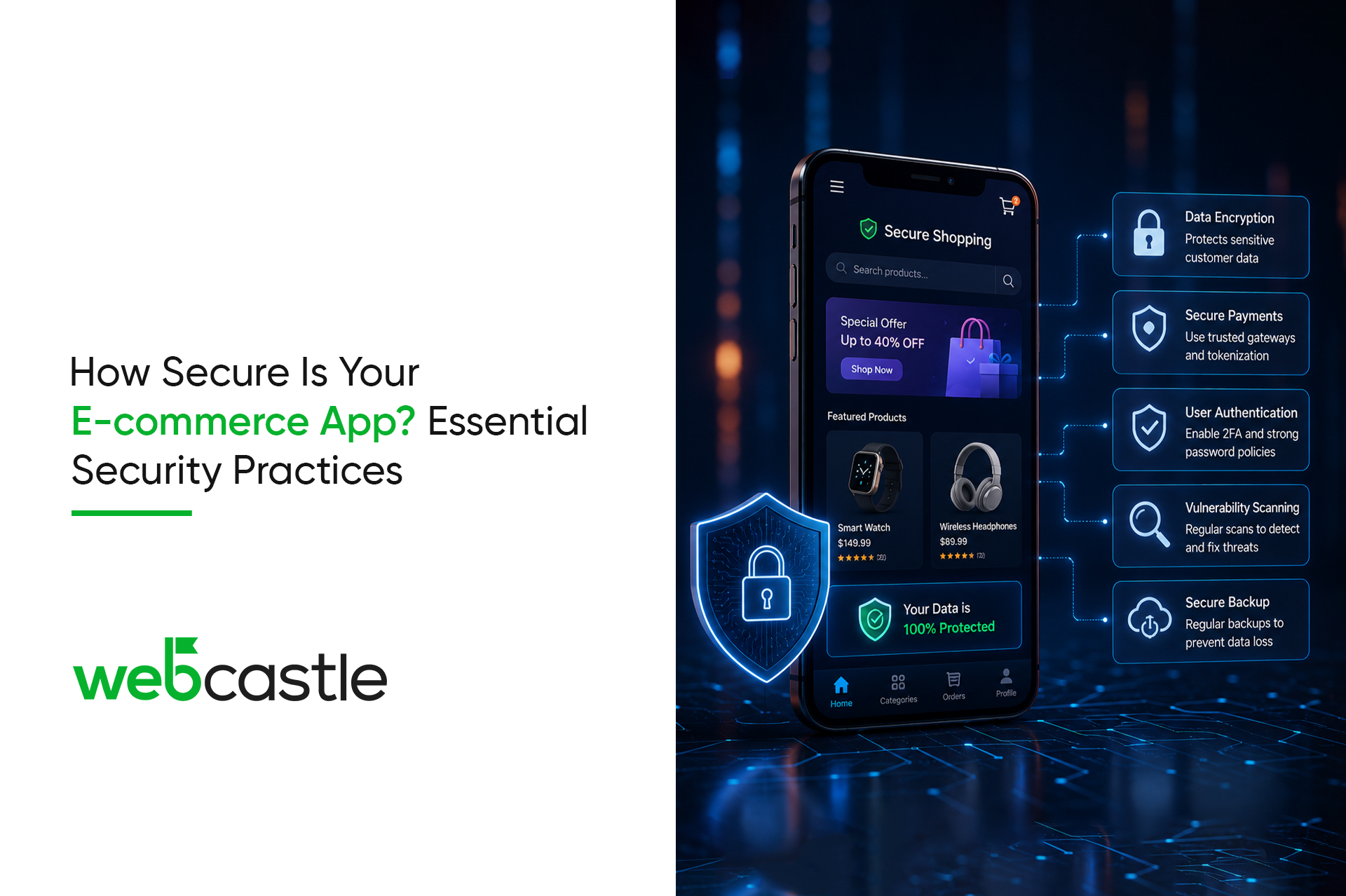
Ransomware hit 88% of small business breaches last year, compared to 39% at large companies. If you run an e-commerce app, you’re not just a target. You’re a preferred one. This guide skips the generic “use strong passwords” advice and gets into the specifics that actually matter.
Your e-commerce app handles exactly what attackers want: payment details, names, addresses, order history, and sometimes stored card data. One unpatched plugin or one missing access check, and all of it is exposed.
Let’s get into what actually protects it, the e-commerce app security best practices.
Why E-commerce App Security Can’t Be Ignored
A breach isn’t just an IT problem. It’s a financial one.
Most small e-commerce businesses don’t have that kind of cash sitting around for legal fees, customer notifications, and lost sales while the site is down.
The damage doesn’t end when the breach is contained, either. Customers who get a “your data was exposed” email rarely come back. Trust, once lost, is expensive to rebuild, if you rebuild it at all.
What makes e-commerce apps so desirable to attackers:
- They store financial data and personal details in one place
- They process transactions almost non-stop, so a single exploit can be reused many times before anyone notices
- They often run on platforms (Magento, WooCommerce, Shopify), and attackers already know how to probe, especially through outdated plugins and third-party scripts
The Threats That Actually Matter
Skip the vague “cyber threats are evolving” talk. Here’s what’s actually breaking into e-commerce apps right now.
Broken access control is the single most common flaw in web applications today. This is what lets an attacker change a URL parameter and view someone else’s order, or reach an admin panel they were never supposed to see.
Injection attacks, SQL injection being the most common form, let attackers insert malicious code through input fields to manipulate your database directly. It dropped from #3 to #5 in OWASP’s latest ranking, not because it’s gone, but because access control problems have gotten worse faster.
Cross-site scripting (XSS) injects malicious scripts into pages your customers trust, often to steal session cookies or redirect them to fake checkout pages.
Payment page skimming is the one most blogs barely mention, and it’s the one regulators just got serious about. If your site hasn’t addressed them, you’re out of compliance right now, not hypothetically.
Credential stuffing uses leaked password lists from other breaches to brute-force their way into customer or admin accounts. It’s automated, cheap to run, and depressingly effective against sites without rate limiting.
What Actually Fixes This
HTTPS and TLS encryption aren’t optional anymore. Without it, payment and login data travel in plain text. Browsers flag non-HTTPS sites as “not secure,” which kills conversions before security even becomes an issue.
Multi-factor authentication is the highest-leverage fix on this list. Microsoft’s own research shows MFA blocks more than 99.2% of account compromise attempts. If your admin panel or customer accounts don’t require it, that’s the first thing to fix this week, not next quarter.
PCI DSS compliance, specifically requirements 6.4.3 and 11.6.1, applies if you handle card data through your own pages or embedded iframes. These require you to inventory every script running on your payment pages and monitor for unauthorized changes. If you don’t know what’s currently running on your checkout page, that’s a serious problem.
Regular security audits and penetration testing, ideally quarterly or after any major update. You want to find your own vulnerabilities before someone else does it for you, uninvited.
Keep software and plugins updated. Outdated CMS plugins are one of the easiest ways into a site. Automate this wherever your platform allows it.
Secure your APIs. Every API endpoint is a potential door in. Use API gateways, rate limiting, and token-based authentication so a leaked key doesn’t hand over your entire backend.
Protecting Customer Data Specifically
Encrypt data at rest, not just in transit. A stolen database is useless if the contents are encrypted.
Collect less. Every field you don’t need is a field you don’t have to protect. If you don’t need a customer’s date of birth to process an order, don’t ask for it.
And know your compliance obligations. GDPR, CCPA, and similar regulations aren’t just formalities. Non-compliance brings real penalties on top of the breach itself.
Security Isn’t a Feature. It’s the Foundation.
Most online store security failures aren’t sophisticated attacks. They’re missed patches, missing MFA, and access controls nobody double-checked. Fixing the basics covered here closes the door on most of what’s actually hitting small businesses.
If you’re building or scaling an e-commerce app, security shouldn’t be an afterthought. WebCastle, the pioneer mobile app development company in Boston, builds platforms with these e-commerce data protections built in from day one, not bolted on after something goes wrong. We also build the mobile apps that increasingly sit alongside these stores, with the same standards applied.
Keep your store, customer data, and transactions secure with trusted e-commerce security solutions. Contact WebCastle today at +1 (240) 347-3649 to get started.
