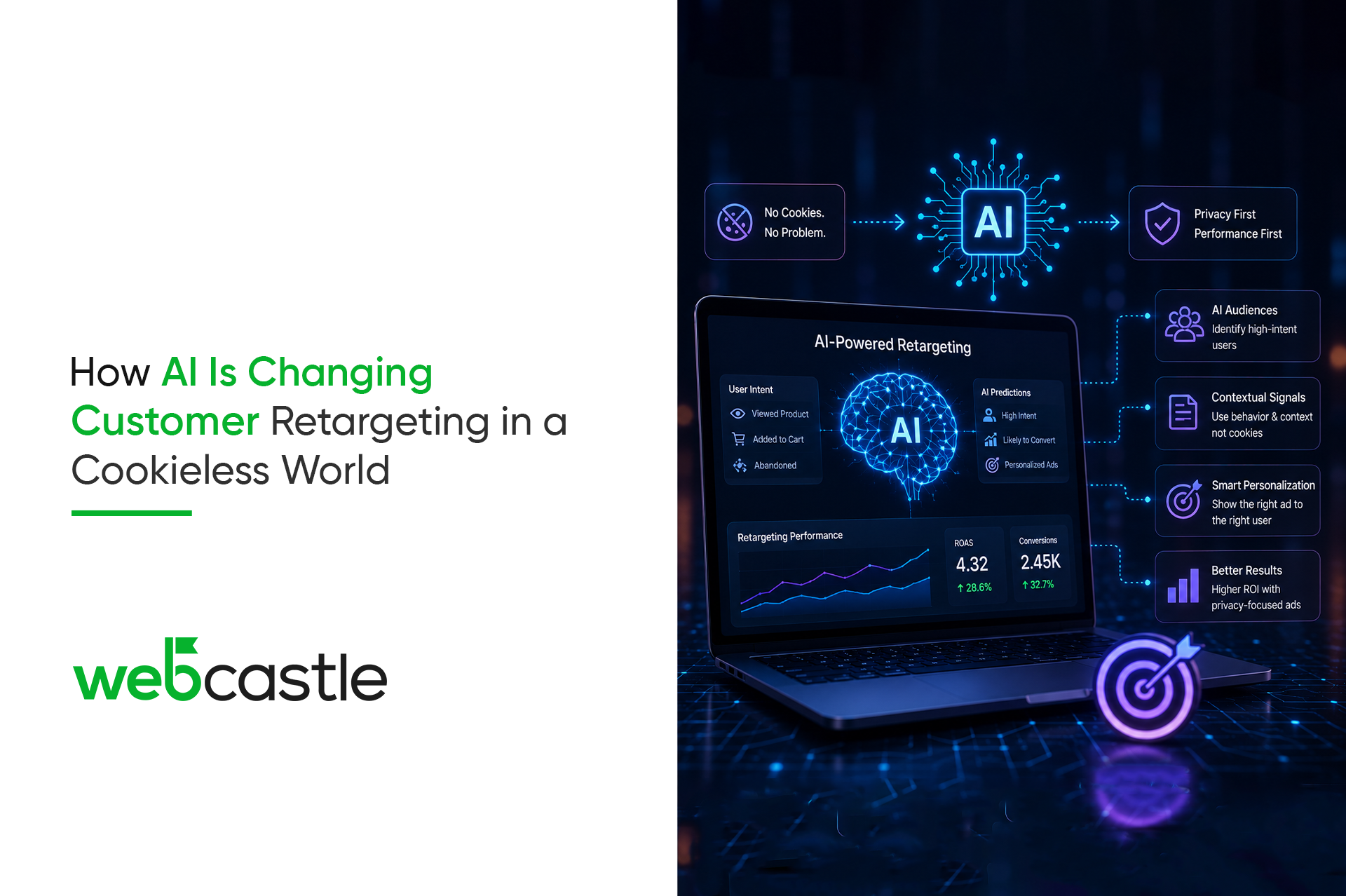
Not long ago, retargeting was almost too easy. A user browsed your product page, a cookie followed them out the door, and your ads showed up wherever they went next. That system worked well enough that most marketers never questioned it.
Then the landscape began to change. Chrome’s move away from third-party cookies accelerated the shift toward cookieless advertising, making it harder for brands to maintain traditional retargeting audiences. The shift wasn’t gradual in practice, even if it was slow in announcement.
What’s less talked about is that AI customer retargeting has actually opened up smarter options. Privacy-first advertising isn’t just a compliance hurdle. For teams willing to adapt, it’s a better way to reach people.
What Is the Cookieless World and Why Does It Matter?
The Death of Third-Party Cookies: What Changed
Third-party cookies didn’t come from the site you were visiting. They came from ad networks and data brokers running quietly in the background, building profiles of your behavior across dozens of unrelated sites.
Google spent years developing Privacy Sandbox as an alternative to third-party cookies, accelerating the shift toward privacy-focused advertising. Chrome remains the world’s most widely used browser, so this wasn’t a niche change. As privacy restrictions increased, many advertisers found it harder to maintain and grow traditional retargeting audiences.
Why Marketers Can No Longer Rely on Old Retargeting Methods
The cookie issue wasn’t the only blow. GDPR had already tightened how European advertisers handle behavioral data. CCPA followed in California. Apple’s App Tracking Transparency update in 2021 required users to actively allow cross-app tracking, and most chose not to.
Taken together, these changes cut off the cross-site visibility that traditional retargeting depended on. Audience pools shrank. Attribution got murkier. The granular user-level data advertisers once took for granted got replaced with aggregated reports that told far less.
How AI Customer Retargeting Is Filling the Gap
AI-Powered Contextual Targeting
Old contextual targeting was basically keyword matching. Pick your topics, show up on pages that contain them. It was blunt, and most advertisers treated it as a fallback option.
Contextual targeting AI works at a different level now. It reads what a page is actually about, not just which words appear in it. Editorial tone, topic depth, the likely mindset of someone reading it at that moment. An article seriously comparing running shoes tells a different story than a general lifestyle piece that mentions shoes once. AI reads that difference and serves accordingly. No user tracking required.
This approach to cookieless retargeting catches people while they’re actively engaged with something relevant, which tends to be more useful than following them based on a search they did days ago.
Predictive Audience Modeling
First-party data marketing doesn’t try to replicate what cookies did. It does something different. AI looks at the behavioral data you already own, your site analytics, CRM history, app activity, and finds patterns that predict who’s likely to convert before they do.
Which pages did high-value customers visit before buying? How did their session behavior differ from people who bounced? Those answers become scoring models. Your retargeting budget goes toward the people showing the right signals, not toward everyone who ever landed on your homepage.
This approach helps brands use predictive audience targeting to identify high-intent users and improve campaign performance.
Lookalike Audiences With Machine Learning
Meta and Google both leaned into machine learning for audience expansion once cookie-based tracking became unreliable. Meta’s Advantage+ works from signals within Meta’s own ecosystem to find users who match your existing buyers in meaningful ways. Google’s tools operate similarly.
The logic holds up well. If AI can identify what your best customers have in common across multiple variables, it can surface more people like them. The data stays inside the platform’s own environment, which is both legally safer and often more reliable than cross-site cookie profiles were.
First-Party Data: The New Foundation of Retargeting
What Is First-Party Data and Why It’s Gold Now
First-party data is what you collect directly, with consent: email addresses, purchase history, on-site behavior, app usage. You own it. No browser update or platform policy change affects your access to it.
As cookieless marketing strategies become the industry standard, this is the data that determines whether a brand can still run meaningful retargeting or has to start from scratch every campaign.
How to Build a Strong First-Party Data Strategy
A few things that actually move the needle:
- Useful lead magnets, tools, guides, calculators, give people a reason to share their contact details willingly.
- Loyalty programs build ongoing relationships with the customers most worth keeping.
- Timely opt-in prompts, post-purchase, post-support, mid-checkout, catch users at moments when they’re already engaged.
- Progressive profiling gathers customer insights over time without creating upfront friction.
A CRM manages customer relationships, while a CDP unifies data across channels, enabling AI-driven retargeting at scale.
AI Tools Powering Cookieless Retargeting
Several platforms now support AI-powered retargeting using first-party data and privacy-friendly targeting methods.
| Tool | What It Does |
| Google Privacy Sandbox | Uses APIs such as Topics to support interest-based advertising while limiting the sharing of individual browsing histories. |
| Meta Advantage+ | ML-driven targeting using Meta’s own first-party signals to find and expand audiences |
| Klaviyo | Email and SMS retargeting triggered by behavioral data you already own |
| Segment | CDP that unifies first-party data across channels into a single actionable customer profile |
| LiveRamp | Identity resolution across platforms using consented data, no third-party cookies needed |
Best Practices for AI-Driven Retargeting Without Cookies
- Own your data pipeline. Email captures, loyalty sign-ups, CRM records. These are long-term assets worth treating like media spend.
- Invest in contextual advertising. Present-moment relevance beats stale behavioral history more often than people expect.
- Run behavioral email and SMS retargeting. Triggers based on your own data, browse abandonment, purchase patterns, work well and don’t rely on third-party anything.
- Test cohort-based targeting. Google’s Topics API keeps individual behavior private while still enabling interest-level targeting. Worth getting familiar with now.
- Lead with consent. Opted-in users convert better. The trust built through transparent data collection tends to show up in the numbers.
Conclusion
The retargeting infrastructure that most brands relied on is gone. What’s replaced it is more work to set up but produces more accurate results when done properly. AI customer retargeting is helping brands adapt to the future of cookieless advertising. By combining first-party data and predictive targeting, brands can reach the right audiences while respecting user privacy.
As an experienced Digital Marketing agency in Boston, Webcastle can help brands build effective retargeting strategies in a privacy-first world. WebCastle helps brands build retargeting strategies that work within today’s privacy landscape. If you’re figuring out where to start, let’s talk.
