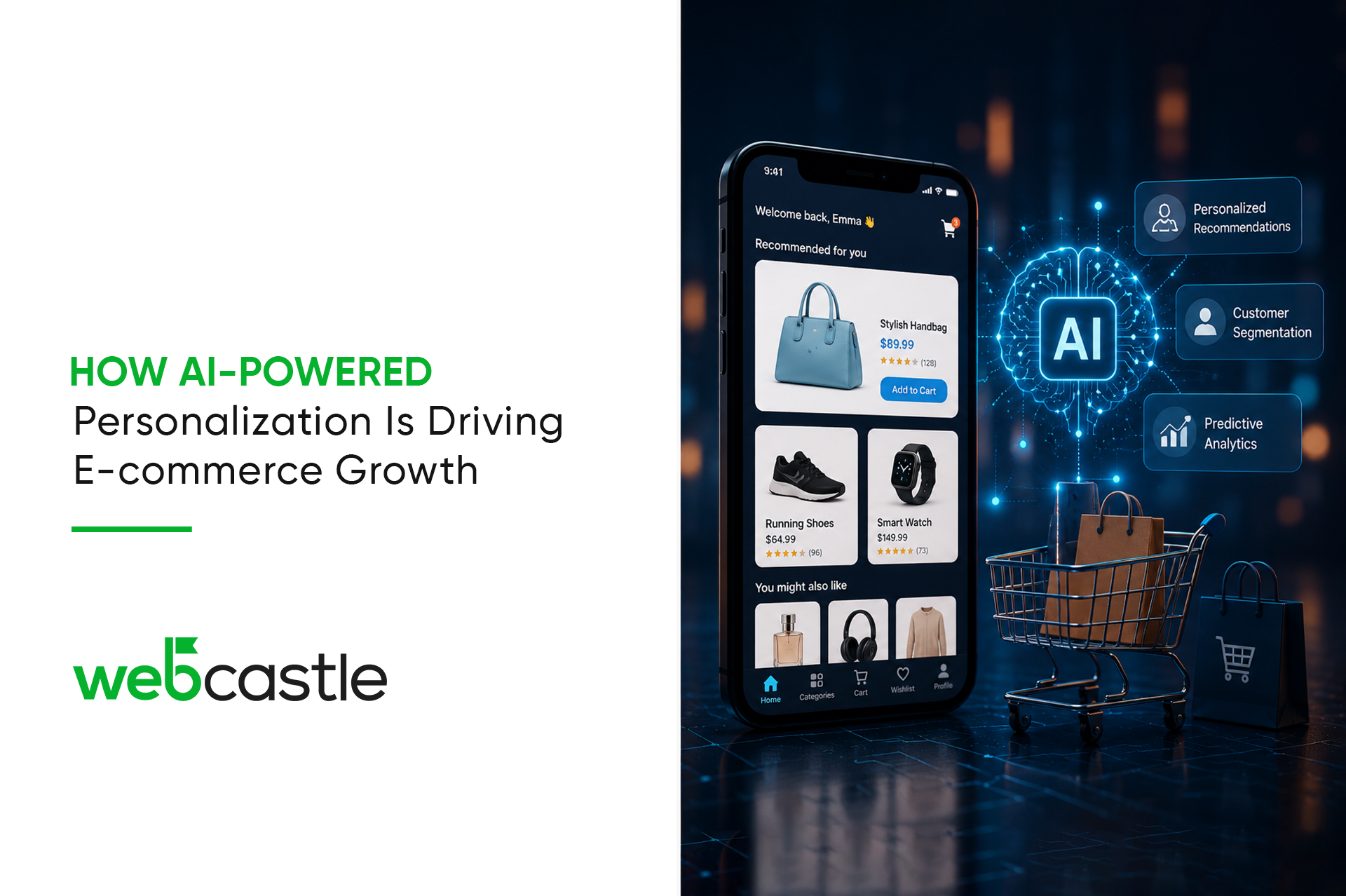
There’s a reason some online stores seem to know exactly what customers want. AI-powered personalization in e-commerce analyzes customer behavior data to deliver relevant recommendations and tailored shopping experiences. As customer expectations grow, businesses that fail to personalize risk falling behind competitors using advanced AI in online retail strategies.
What Is AI-Powered Personalization in E-commerce?
AI personalization e-commerce uses machine learning e-commerce to decide what each shopper sees, rather than showing everyone the same storefront. Two visitors on the same site can have different personalized shopping experiences based on their behavior, device, and location.
How AI Turns Customer Data Into Personalized Shopping Experiences
Every customer interaction generates valuable data. Through machine learning in e-commerce, AI analyzes this information to understand customer preferences and deliver more relevant experiences over time.
Netflix was an early adopter of AI-driven content personalization. Two documentary fans see different homepages because the algorithm knows one watches nature films and the other gravitates toward true crime. Amazon applies the same reasoning to products. Those “customers also viewed” and “picked for you” sections are generated per user, per session. The more interactions recorded, the more accurate the predictions become.
Key Benefits of AI Personalization for E-commerce Businesses
Higher Conversion Rates With Personalised Product Recommendations
Personalized product recommendations generate over 35% of Amazon’s revenue. That means a third of purchases happen because something was surfaced to a shopper rather than searched for.
Smaller stores see the same proportional effect. When a shopper lands on a page showing products that fit their actual taste rather than a generic popularity list, they click more and buy more often. Less effort to find something worth buying usually means a higher chance of completing the purchase.
Increased Customer Retention and Lifetime Value
First-time buyers are expensive to acquire. Returning customers cost less and tend to spend more over time, increasing customer lifetime value (CLV). Keeping them is where personalization earns its place.
Post-purchase emails suggesting something relevant to what someone just bought outperform generic newsletters significantly. Replenishment reminders for consumable products, sent before a customer thinks to go looking elsewhere, work surprisingly well. Loyalty perks tied to what someone actually purchases feel genuine rather than promotional. These small, consistent touches are what make a customer less likely to bother switching to a competitor.
Reduced Cart Abandonment Through Smart Re-engagement
About 70% of online carts get abandoned. Not all of those shoppers were ready to buy, but many were close and got distracted or hesitated over something fixable like shipping cost.
AI-powered follow-ups support cart abandonment recovery by delivering personalized reminders, relevant offers, and product recommendations based on customer behavior. Someone who spent several minutes on a product page gets a different message than someone who loaded a cart quickly and disappeared.
Best AI Personalization Tools for E-commerce in 2025
Choosing the right ecommerce personalization tools depends on your store size, customer data, and personalization goals.
- Klaviyo: Personalized email and SMS marketing with Shopify and WooCommerce integration.
- Nosto: Delivers personalized product recommendations and on-site experiences.
- Dynamic Yield: Enterprise platform for personalization, dynamic pricing e-commerce, and A/B testing.
- Bloomreach pairs a customer data platform with personalization and search tools. Strong for stores where search accuracy matters as much as recommendations.
- Salesforce Einstein is built for businesses already on Salesforce Commerce Cloud, adding AI personalization without a separate platform.
Real E-commerce Brands Winning With AI Personalization
Amazon built recommendations into the core of how the site works. Its recommendation system has been refined over years, but the basic idea of connecting past purchases to future suggestions is not complicated to understand.
Sephora combines skin type data, purchase history, and virtual try-on behavior to shape what each customer sees across its app and loyalty program. The loyalty program holds up against heavy competition largely because its offers feel individually relevant.
Stitch Fix structured its whole business model around this. Customers describe their preferences, receive a curated clothing box, and return what doesn’t work. Every return teaches the algorithm something. Without improving personalization, the business doesn’t function.
Common Challenges and How to Overcome Them
Data Privacy Concerns — Staying Compliant With GDPR and CCPA
GDPR covers European customers. CCPA covers California. Both require user consent before collecting behavioral data. Consent-first collection written in plain language is a legal requirement and also a trust signal. Opt-in customers engage more with personalized content.
Poor Data Quality Blocking Personalization Results
Disconnected systems are the most common problem. When your email tool, CRM, and transaction records don’t share data, the AI works from an incomplete picture. A customer data platform (CDP) creates one unified profile by pulling every source together. Personalization built on complete data performs better. Personalization built on incomplete data relies on assumptions.
How to Implement AI Personalization in Your E-commerce Store
Businesses can also combine personalization with behavioral targeting and an AI chatbot for e-commerce to provide real-time assistance, product recommendations, and a more engaging shopping experience.
Step 1 — Start With One High-Impact Use Case
Product recommendations or email personalization. Pick one and get it working properly before expanding. Both are measurable and both tend to show results within weeks.
Step 2 — Choose the Right Tool for Your Business Size
Smaller stores usually start well with Klaviyo or Nosto. Larger operations with complex catalogs or enterprise infrastructure should look at Bloomreach or Salesforce Einstein. Match the tool to your current reality, not your three-year ambition.
Step 3 — Measure, Test, and Scale
Track key metrics before launch, including conversions, order value, and repeat purchases. Run personalized and non-personalized versions side by side. That gap tells you what’s working, and scaling it is what makes personalization one of the most effective e-commerce growth strategies.
Conclusion
AI personalization in ecommerce helps businesses deliver more relevant customer experiences, improve conversions, and build long-term customer loyalty. As part of effective e-commerce growth strategies, it enables businesses to create personalized shopping experiences that drive sustainable growth.
Getting started doesn’t require doing everything at once. It requires clean data, the right tool, and patience to test and learn.
If you’re looking to implement AI personalization in your ecommerce store, WebCastle helps businesses build scalable solutions that improve customer experiences, increase conversions, and support long-term growth. As an ecommerce website development company in Boston, we help brands implement AI-driven personalization using the right data, tools, and technology to create better customer experiences and drive growth.
Turn customer data into growth with AI-powered personalization from WebCastle.
