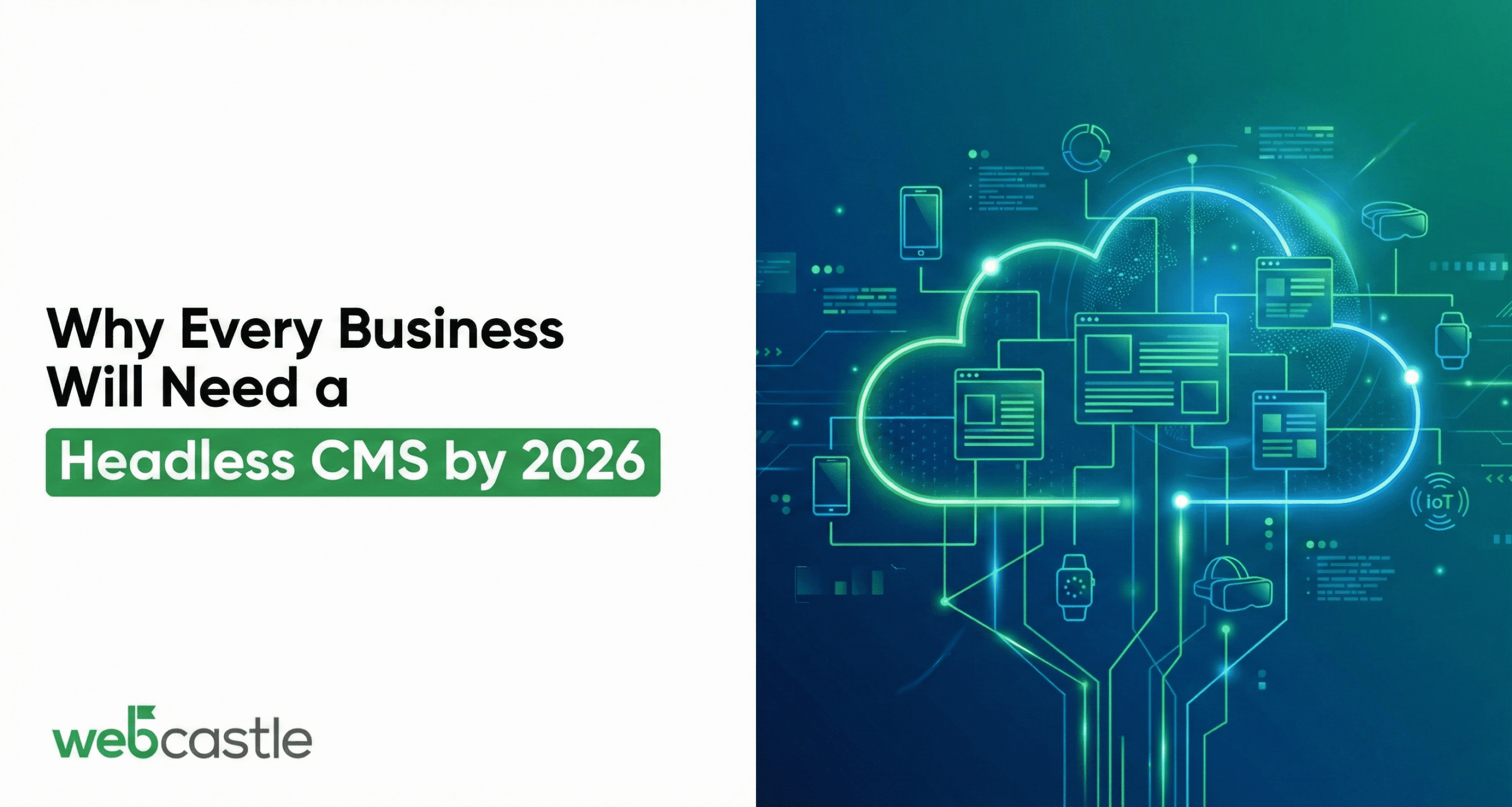
Most CMSs in use today were built for a single website and a desktop audience. The problem is that your customers are no longer in one place. They jump between your site, mobile app, customer portal, in‑store screens, emails, and social. If your content system can’t keep up, your team ends up copying, pasting and patching. That’s where headless content management comes in.
What “headless” really means (without the jargon)
Old‑style CMS = content + design + templates all glued together.
Headless CMS = content in one place, delivered anywhere.
With a headless, API-first CMS:
- You store content once in a central, structured system.
- Any front end (website, app, kiosk, or even a smartwatch) pulls that content through APIs.
- This is called decoupled architecture: the “head” (front end) and “body” (content + logic) are separate.
The simple business win: you stop rebuilding the same thing for every channel.
Why API-first CMS is becoming the default
Headless and API-first CMS adoption has taken off because it solves day‑to‑day pain for marketing and product teams.
Big advantages:
- One source of truth
- Create an article, product description or FAQ once.
- Reuse it across the web, apps, landing pages, regional sites and more.
- Faster launches
- Devs build front ends that just “ask” the CMS for content.
- Marketing can spin up new pages or experiences without breaking the core site.
- Ready for whatever comes next
- Voice, wearables, in‑store displays, and AR — all can plug into the same content store later.
In plain terms: less duplication, fewer delays, and more room to experiment.
What the board actually cares about
You can’t walk into a leadership meeting with only architecture diagrams. You need outcomes.
Headless content management helps you show:
- Better performance and SEO
- Decoupled front ends can be lean and fast, which helps Core Web Vitals and search.
- Higher team productivity
- Editors work in one place, with clear workflows.
- Approved content goes live in multiple channels without manual rework.
- Cleaner integrations
- An API-first CMS links easily to CRM, marketing, analytics and eCommerce.
- You get clearer reporting and more consistent campaigns.
That’s the kind of story non‑technical stakeholders understand.
Why “by 2026” isn’t just hype
The 2026 timeline sounds aggressive, but look at what’s happening:
- Customers already expect the same content and tone on your site, app and other touchpoints.
- Personalisation and testing need structured, reusable content, not fixed page templates.
- Vendors keep pushing headless and hybrid; purely monolithic systems are slowly turning into “legacy”.
If you wait, your CMS becomes a brake. You can still move, just not as quickly as competitors who can publish once and reuse everywhere.
Where a Boston CMS agency like WebCastle fits in
Knowing you should go headless is one thing. Making it real is another. You have to pick platforms, plan content models, migrate safely and connect everything to your current stack.
This is where working with a Boston CMS agency like WebCastle helps:
- Review your current setup
- How is content created, approved and reused today?
- Where are you copy‑pasting or waiting on devs for simple changes?
- Implement and integrate
- Build websites, portals, or apps using APIs.
- Connect CMS to CRM, marketing, analytics, and eCommerce.
- Plan for migration and team training
- Move content in phases (for example, start with marketing pages, then product, then portals).
- Train your marketers and editors so they feel at home in the new system.
You avoid a risky “big bang” launch and instead follow a controlled path from your old CMS to a headless setup that matches your goals.
Time to check how future‑ready your content is
Headless content management will not fix weak messaging or bad content. But if your team is already:
- Duplicating the same copy into multiple systems
- Fighting with templates for every small change
- Waiting weeks to launch new pages or experiences
…then your current CMS is holding you back.
A simple first step:
- List your main digital channels today.
- Add the ones you realistically want to live by 2026.
- Mark where your CMS slows you down.
Talk to a Boston CMS agency like WebCastle to explore a phased move to an API-first, headless CMS. Starting early helps you stay in step with how customers interact with your business.
Curious how a headless, API-first CMS can simplify content and speed up launches? Talk to WebCastle today to explore a phased approach that works for your team and channels.
