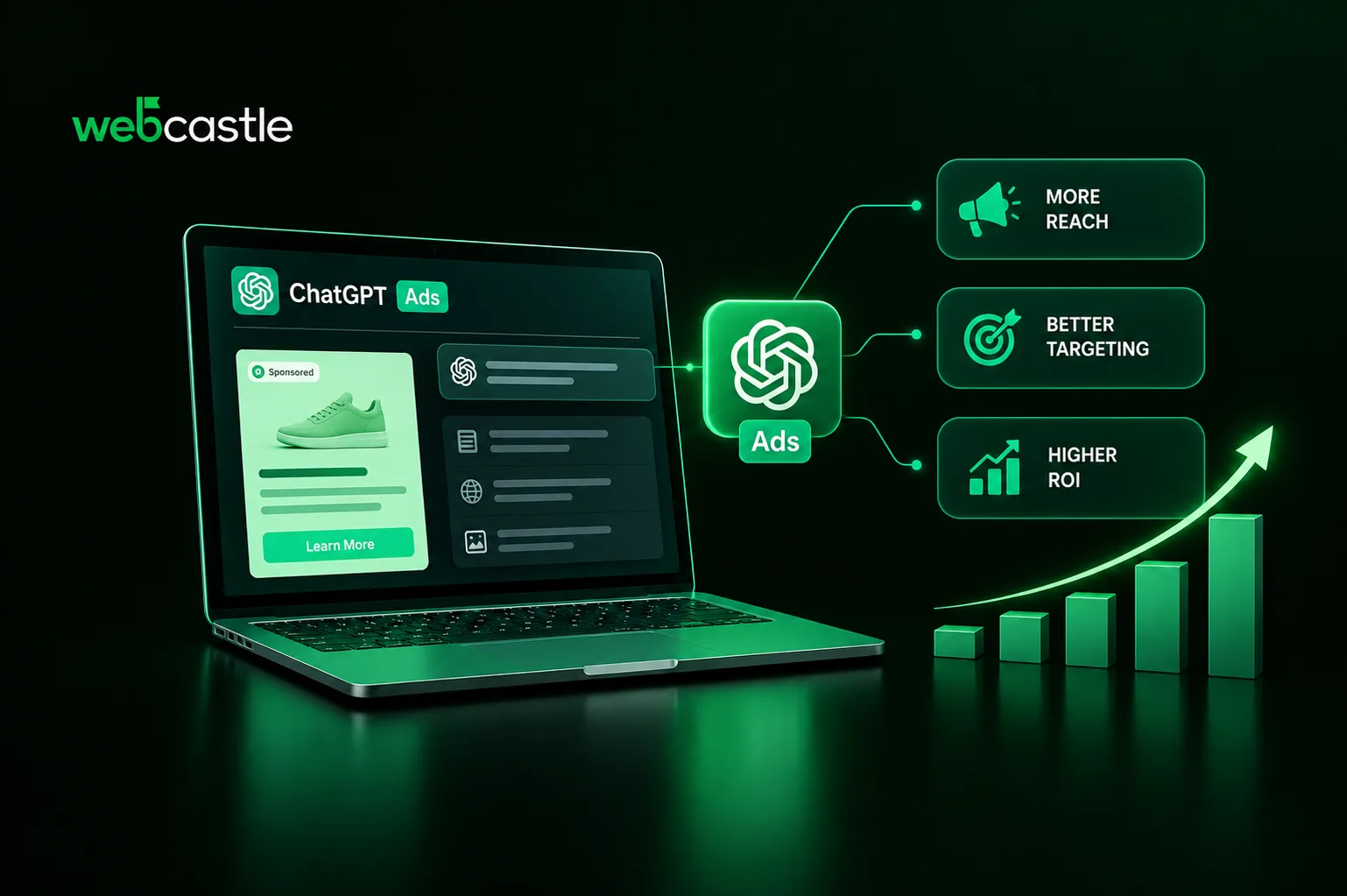
A customer describes a problem to ChatGPT, asks for possible solutions, and compares different products or services. During that conversation, ChatGPT may display a relevant, clearly labelled ad. For businesses, this creates another opportunity to reach potential customers while they research their options.
But paying for an ad does not guarantee that ChatGPT will recommend your business in its answer. This article explains what businesses need to know about ChatGPT ads in India and six checks to complete before investing in a campaign.
The Opportunity and Challenges of ChatGPT Ads for Businesses
Traditional search engines display a list of links that users can explore. ChatGPT allows users to ask questions, provide more details, and compare options through a conversation. Relevant ads can introduce businesses to people while they are considering a purchase or looking for a solution.
OpenAI reported that ChatGPT reaches 1.2 billion people each week in October 2026. India is also a major market for ChatGPT, with more than 100 million weekly users reported by OpenAI in February 2026. These figures highlight the potential reach of the platform, but they do not guarantee results for individual advertisers.
OpenAI introduced self-service Ads Manager access in India in August 2026. Advertisers can create campaigns directly through the platform, subject to its eligibility and account requirements.
For smaller businesses, the main challenge is understanding how paid ads fit into their wider marketing strategy. Buying an ad does not guarantee an organic mention in a ChatGPT answer. Businesses also need to track enquiries, measure campaign results, and maintain accurate information about their products and services.
What Are ChatGPT Ads?
ChatGPT ads are paid placements that can appear separately from ChatGPT's answers. Here are the main points businesses should understand:
- Ad placement: Ads are clearly labelled and displayed separately from ChatGPT's responses.
- User eligibility: Ads may appear for eligible users on the Free and Go plans. Plus, Pro, Business, Enterprise, and Edu accounts do not receive ads.
- Reporting and privacy: Advertisers receive aggregated performance data, such as views and clicks. They do not receive users' private conversations, chat histories, or memories.
- Targeting and relevance: OpenAI's advertising system considers factors such as the current conversation, the ad's landing page, the ad copy, advertiser-provided context, and targeting settings.
- Availability in India: India is listed as a country where eligible businesses can use self-service Ads Manager. The legal entity running the ads and receiving the bill must be based in a country supported by the platform.
- Bidding options: ChatGPT Ads supports different campaign objectives and bidding options, including click-based and conversion-focused campaigns. Available options depend on the campaign setup and account eligibility.
Businesses should check OpenAI's official Ads Manager availability page and advertising help centre before launching a campaign, as features and eligibility may change.
Who Sees ChatGPT Ads?
ChatGPT ads may appear to eligible users on the Free and Go plans. Users on Plus, Pro, Business, Enterprise, and Edu plans do not receive ads. Ads are also not shown to accounts identified as belonging to people under 18.
This distinction matters when planning a campaign. Consider the people you want to reach, the questions they may ask ChatGPT, and whether your product or service fits those conversations.
For example, a business selling accounting software could target relevant conversations about managing invoices or business expenses. The ad should lead to a landing page that directly addresses the user's needs.
Start by matching the campaign to your target audience and business goals. Then test a manageable budget and measure the results.
ChatGPT Ads: Strengths and Limitations
Suppose someone asks ChatGPT to compare accounting software for small businesses in India. ChatGPT may provide an answer based on the information available to it, while a relevant paid ad may appear separately.
These are two different forms of visibility:
- Paid visibility: Your business can pay to display an eligible ad to relevant users. The ad is labelled, and its placement depends on the advertising system's selection process.
- Organic AI visibility: Your business may appear in an answer when ChatGPT identifies it as relevant to the question. Buying an ad does not guarantee this placement.
Organic visibility can be supported by accurate business information, useful website content, clear service descriptions, and trustworthy external references. However, these improvements do not guarantee that ChatGPT will mention your business in every relevant answer.
Be cautious of agencies that promise guaranteed ChatGPT recommendations in exchange for an advertising budget. Ask for a clear explanation of the work, the expected outcomes, and the measurement methods.
Before spending money on ads, complete these six checks.
- Check your AI visibility. Ask ChatGPT, Gemini, and Perplexity the same questions about your business and industry. Record which businesses they mention and whether the information about your company is accurate. Repeat the test monthly to identify changes.
- Check your business information. Make sure your business name, address, phone number, and services are consistent across your website, Google Business Profile, and relevant directories. Conflicting information can make it harder for customers to verify your business.
- Improve your website content. Organise pages around clear customer questions. Use descriptive headings, concise explanations, and useful details so visitors can quickly understand your products and services.
- Review your technical SEO. Use appropriate headings and relevant structured data where supported. Check that important pages can be crawled and indexed, and ensure that the information in your schema matches the visible page content.
- Set up enquiry tracking. Add a "How did you hear about us?" field to enquiry forms and track campaign visits, calls, and form submissions where possible. This helps you understand how customers discover your business, including when analytics cannot identify the full customer journey.
- Run a small advertising test. Choose one campaign objective, direct users to a relevant landing page, and set up tracking before launch. Start with a budget your business can afford, then review the results against your goals.
Keep your existing campaigns that generate valuable leads running while you evaluate the new channel. Compare the quality and cost of enquiries before deciding whether to increase your budget.
Why Might a ChatGPT Ad Fail to Run?
If your campaign is not delivering, check the account and campaign settings before assuming that the platform is the problem.
Common issues to investigate include:
- Ad review: The ad may still be under review or may not have been approved.
- Account verification: The advertiser's account may need additional verification.
- Budget limits: The campaign may have reached its spending limit.
- Campaign schedule: The campaign may have ended or may not yet be scheduled to run.
- Billing issues: The payment method may need attention.
Check the campaign status and any warnings in Ads Manager. For the latest troubleshooting guidance, consult OpenAI's advertising help centre.
Do ChatGPT Ads Influence Its Answers?
No. OpenAI states that ads do not influence ChatGPT's answers. Ads are labelled and displayed separately from the responses generated by ChatGPT.
A paid placement does not mean that ChatGPT endorses the advertiser or recommends its products or services.
WebCastle is a digital marketing agency in Boston that has worked with businesses since 2008. The team can review how AI tools describe your business, identify gaps in website content and business listings, and help set up paid campaigns with appropriate tracking.
Request Your AI Visibility Audit
Find out whether your business needs improvements to its AI visibility, its advertising strategy, or both.
WebCastle can review which competitors appear in relevant AI-generated answers, identify information gaps, and recommend practical steps to improve your online presence.
Visit WebCastle to discuss an AI visibility audit and the next steps for your business.